
Roofing & gutters · October 11, 2026
How flashing, roof edges, and gutters manage water together
When water appears near a ceiling, wall, porch, or foundation, the visible spot may not be where the problem began. Looking at the path water takes across the roof and away from the home helps define the right scope.
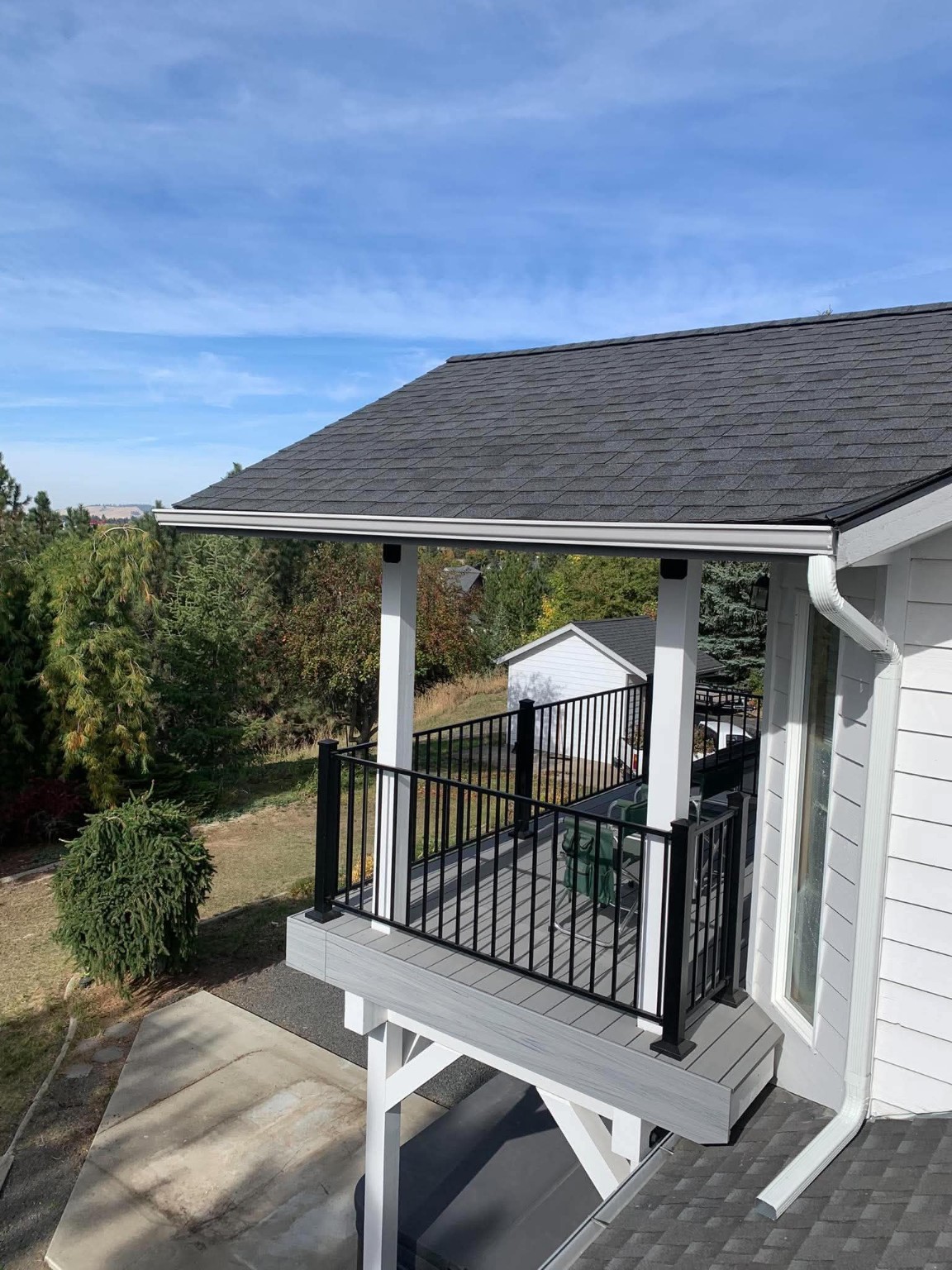
Start where roofing surfaces change
Open roof planes are only one part of the system. Water also moves through valleys and around walls, chimneys, skylights, vents, and other penetrations. These transitions rely on properly layered roofing materials and flashing to direct water back onto the roof surface.
From the ground, a homeowner may be able to notice lifted trim, displaced shingles, staining below a wall-to-roof connection, or sealant that is visibly cracked. A roof should not be climbed when it is wet, icy, steep, or otherwise unsafe. Close inspection is work for someone with the right access and fall protection.
Follow the water to the roof edge
At the eave, water leaves the roofing surface and enters the gutter. The edge materials, fascia, gutter position, outlets, and slope all affect that handoff. Water running behind a gutter can point to a roof-edge or attachment issue rather than a simple need for cleaning.
Fascia condition matters because gutters commonly fasten to it. A soft, split, or loose board may not provide a sound attachment surface. If fascia work is needed, the written estimate should say whether it is included or priced separately.
Check where the downspouts discharge
A downspout completes the visible drainage path. Look for disconnected elbows, crushed sections, water spilling from joints, or discharge that leaves water immediately beside the home. The appropriate outlet location depends on the property, grade, walkways, and other site conditions.
What homeowners can document before an estimate
- Where water first became visible and whether it appears during every storm
- Whether the concern is near a wall, chimney, skylight, valley, eave, or gutter corner
- Photos taken safely from the ground, an upper window, or another protected location
- Any gutter overflow, sagging, staining, or water running behind the gutter
- Where nearby downspouts release water
These observations do not replace an inspection, but they help the contractor understand which roofline details need attention.
What a clear written scope should explain
The proposal should identify the areas being addressed and distinguish roofing work from gutter or fascia work. Depending on the project, that can include shingles or metal panels, underlayment, flashing, roof-edge materials, fascia, gutter runs, outlets, downspouts, cleanup, and how concealed conditions will be handled if they appear after removal begins.
Learn more about residential roof replacement and seamless gutters and fascia, or view our project gallery.
Residential service across the Inland Northwest
Iron Cross Builders provides residential roofing, seamless gutter replacement, and fascia work in Moscow, Pullman, Lewiston, Clarkston, Spokane, Coeur d’Alene, and nearby communities where the project is a good fit.
Seeing a roofline or drainage problem?
Share the property location, where the water appears, and any photos you can take safely. We will help you plan the next step.
Request a free estimate